
Word: Ayu Arman
Let’s enter the Mimika mangrove botanical forest. Experience firsthand how these mangroves are a living and organic bastion for the maintenance of biodiversity in the ecosystem. Here, mangroves are the guardians
of climate balance, coastal protection, and economic contributors to the community.
The mangrove forest in Papua is recorded as the largest mangrove forest in Indonesia. In terms of numbers, Papua’s mangrove forests make up 58% of Indonesia’s mangrove forests and account for around 12% of the world’s mangrove forests.
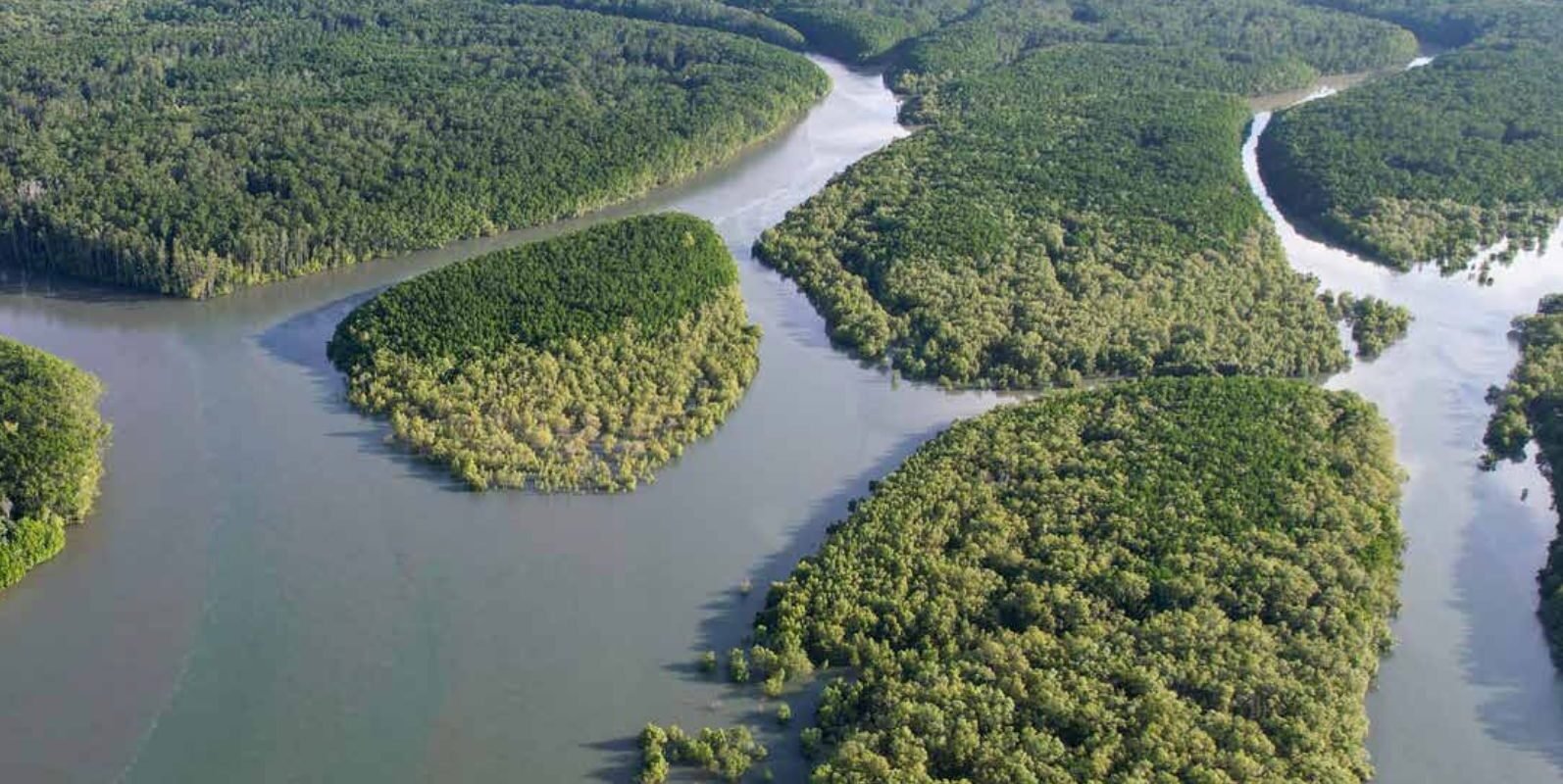
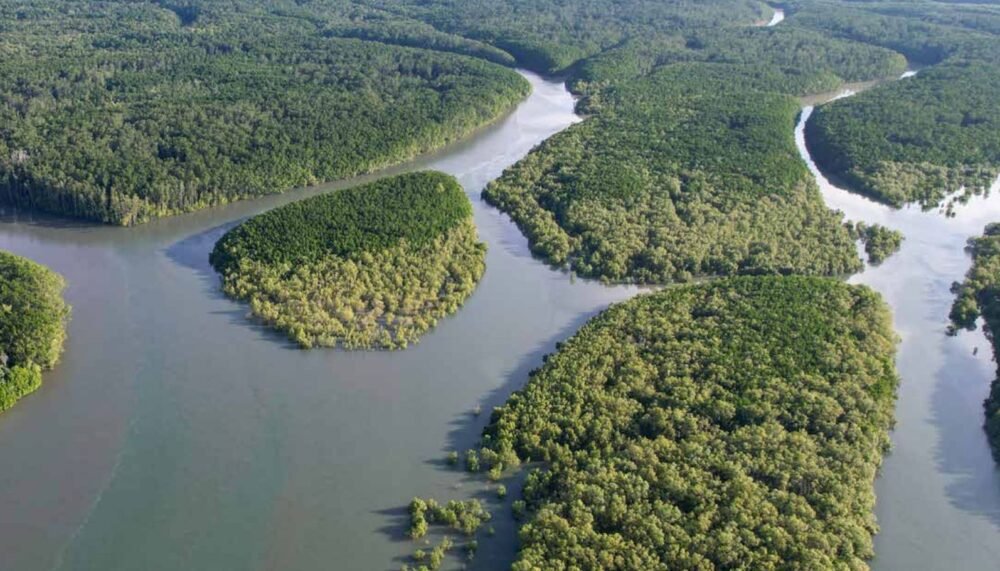
In late 2024, we travelled down the Wania River to get a view of Mimika’s mangrove forest. We were immediately mesmerised when we saw from a height the beauty of the mangrove forest ecosystem, which spread out wide and dense like small islands above the rivers and beaches of Mimika.
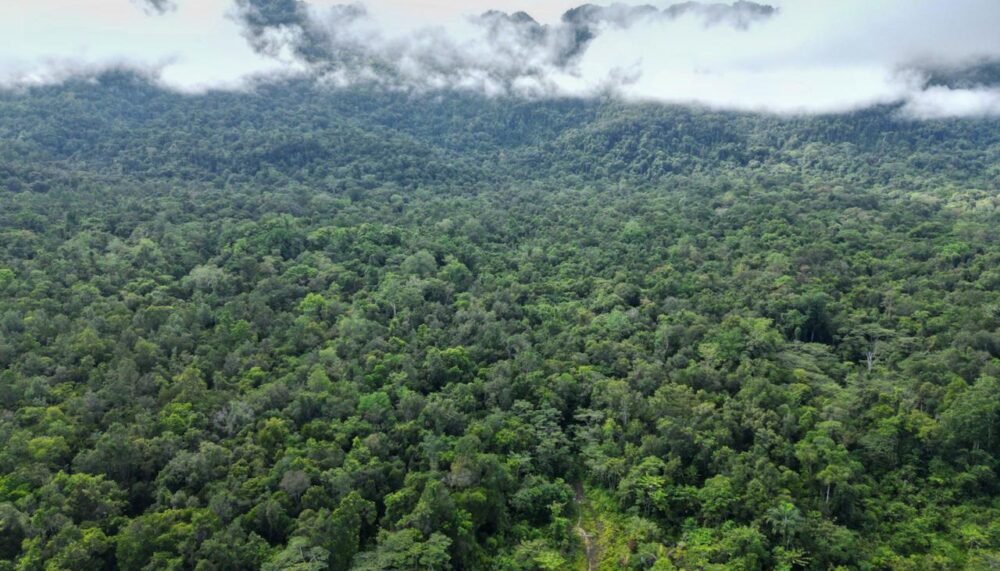
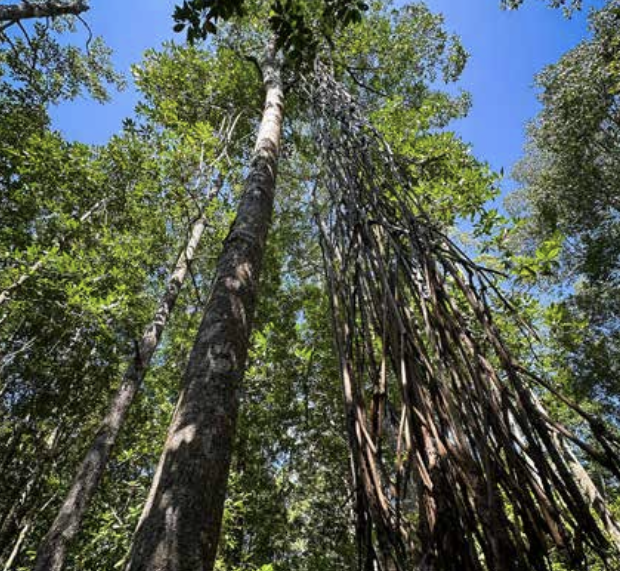
Mangroves are everywhere. In rivers, in estuaries, on the coast. The mangroves that grow in Mimika are unspoilt and consist of 42 species covering 186,000 hectares, the fourth largest in Papua.
To many people, mangrove forests may look unappealing because they are muddy, swamp-like places filled with mosquitoes, snakes, spiders and other insects. However, if we take a teaspoon of mud from a mangrove forest and look at it with a microscope, we will find over ten billion bacteria inside. These bacteria help break down leaf litter and other natural materials.
Above the water, the mangrove trees and canopy provide an important habitat for many species of birds, insects, mammals and reptiles. Underwater, the mangrove roots that stand between land and sea stabilise the environment and provide a living space for many species of plants and animals.
The soft substratum in mangrove forests forms habitats for a variety of species and the spaces between the roots provide food and shelter for motile fauna such as shrimp, crabs and fish.
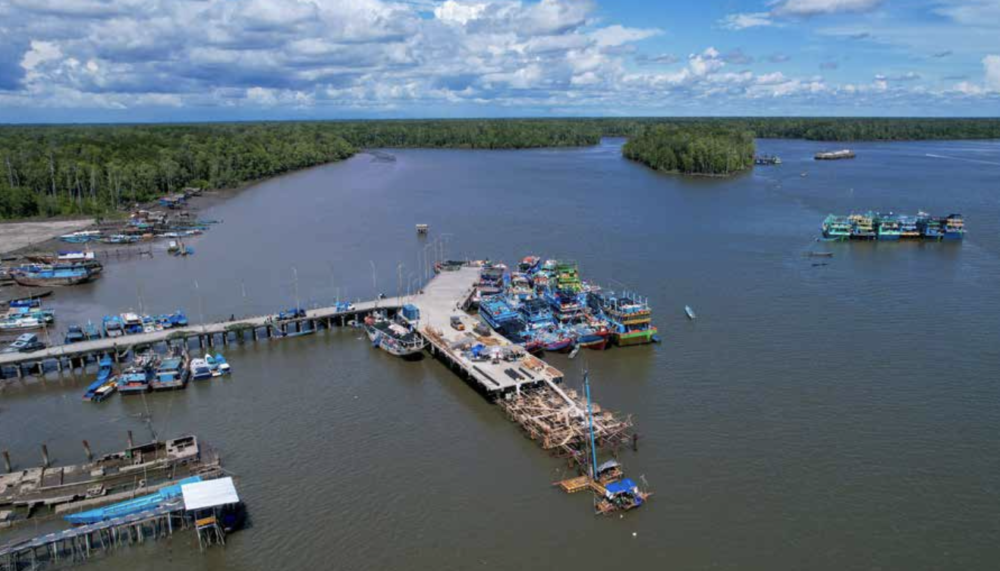
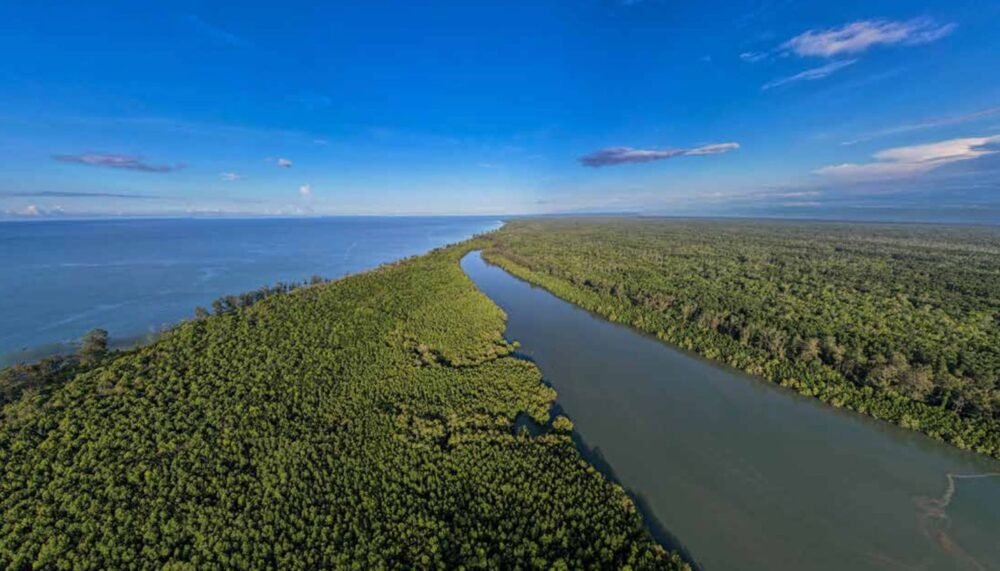
Mangrove forests can also fight coastal erosion. They act as breakwaters, dissipating storm surge and wave energy. Moreover, mangroves are carbon sinks from the air and ocean for long periods of time. Therefore, mangroves are not just ordinary trees. They are living and organic bulwarks for the maintenance of biodiversity in the ecosystem, guardians of climate balance, coastal protectors, and economic contributors.