
Word: Ayu Arman
Some are created naturally, some are created.To sustain a life in harmony with nature, Mandiri Jaya was created. An agro-tourism village that helps us get up close to the rows of flourishing sago trees and witness the daily life of indigenous mountain people sowing, guarding and harvesting crops.
At the end of 2024, we received an invitation from the head of Mandiri Jaya village, the southernmost village in Wania District. All the villagers gathered together in the courtyard of the chief’s house. They welcomed us warmly.
That day they were celebrating bakar batu, a unique ritual that combines togetherness, gratitude and a traditional ceremony involving the indigenous community. Everyone present, women and men, adults and children, danced together to traditional music.
‘Waak, waak, waak,’ said the man hosting the event as the women and men finished a song that accompanied the dance of togetherness.
Waak, waak, waak is a thank you to all the villagers who have participated in the stone-burning ritual.
Everyone was busy that day. The men prepare the burning stones, while the women clean vegetables and various types of tubers, such as cassava, taro or petatas, and yams. There are also bananas, chickens and pigs. All the food is taken from their own gardens. Forty per cent of the tubers and vegetables sold at Mimika Market come from Mandiri Jaya Village.
One hundred per cent of the villagers are indigenous Papuans from the Damal, Dani, Nduga and Moi tribes who work as farmers. That is why Mandiri Jaya has been designated as an agro-tourism village by the government.
As we entered the village, we felt the cool air from the trees that lined the streets. Each house, in the front and back yards, is planted with vegetables and herbs, such as lemongrass, turmeric, ginger and itchy leaves. We saw that they are very skilful at managing plants in the garden and forest.
The village has 160 hectares of forest, which is overgrown with various types of plants and inhabited by various animals.
When we had the opportunity to enter the forest, we saw birds singing happily and trees of sago, matoa, ganemo and other trees we didn’t recognise.
Genemo trees grow at the edge of the forest and in dense vegetation. Papuans use the young leaves of ganemo as a vegetable, while the fruit is burnt and eaten like peanuts.
Another type of plant we found was waxy vegetable. This vegetable is similar to sugar cane flowers. When viewed, sayur lilin looks like a collection of fish eggs.
The fruits that we saw in this village forest were matoa, langsat, durian, jackfruit, mango, water guava, guava, snake fruit, forest areca nut, rattan,
rambutan, banana, sugar cane, breadfruit, palm oil, forest nuts, red fruit, and forest coconut. These types of plants bear fruit depending on the season.
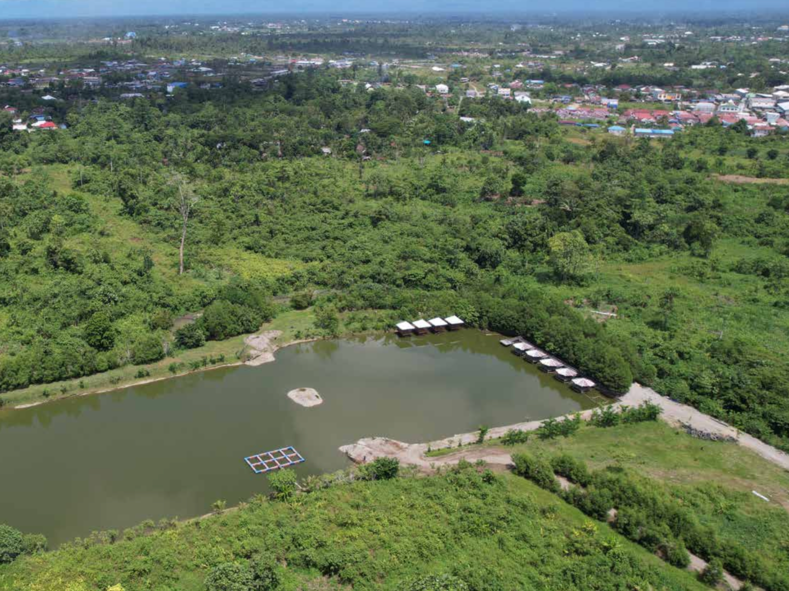
The forest also provides protein needs in the form of sago worms, pigs, cuscus, deer and others. Various types of river fish are available in this village, including crocodiles, the guardians of Casol Lake which is located on the edge of the village. Unfortunately, that day we couldn’t see the crocodile because he was laying eggs in the swamp.
Elias Mirip, the founder of the village, told us that he had kept the crocodile since childhood. He found him in the swamp. Then he trained the crocodile to be a lake guard.
“Crocodile, you can’t leave here. If you leave this area, you will definitely be killed by someone. So, you just stay here. You can eat fish here every day, but don’t eat more than three. Your job is to look after this talaga. If someone bathes and damages this lake, you have to appear so they will be afraid.”
That’s right. The crocodile will appear every time someone wants to bathe in the lake or when he is called by the village head who is his “foster father”.