
Word: Ayu Arman
Keakwa could be one of your holiday destinations.The island offers the cultural hospitality of the Kamoro tribe, natural beauty, historical narratives of World War II, and an abundance of fishery products.
We felt the warmth of the people of Keakwa, who welcomed us as soon as our speedboat pulled up to shore. Some of them immediately climbed coconut trees and picked the fruit as a welcome treat.
The people of Keakwa Island seem to be used to visitors. Perhaps because the island is often visited by residents or fishermen from other places who want to sell their fish and crabs. The island is a kind of transit for sorting before being packed in Mimika City and then crossed to metropolitan cities on Java Island.
It is said that the name Keakwa came from interactions with migrants. At that time, the ancestors of the Keakwa people still lived at the head of the river (upstream) and often went down to the coastal area to fish. While they were forging iron as a tool to catch fish, the Portuguese approached them and asked, ‘Which village are you from?’
Their ancestors thought the Portuguese wanted to borrow a boat. They replied, ‘Ku keau.’ ‘Ku’ means boat and “Keau” means use. The Portuguese then called the village Keuka. When missionary Linus Dumatubun taught religion in this village, he later wrote the name of the village as Keakwa.
Keakwa is located in the Central East Mimika District, directly opposite the Arafuru Sea. The island is actually still integrated with the large island of Mimika, Papua, Indonesia. However, Keakwa is bordered by a large river, making it seem as if it is separated from Mimika.
The journey to Keakwa took approximately three hours from Timika City. We passed rivers, estuaries, oceans and several islands.
The island is still deserted. There are not many inhabitants and no vehicles, making life there feel unspoilt.
We felt filled with abundance when we were on the island. All our food needs were available all around us. Coconuts with their fresh water can be picked directly from the tree. Traditional food dishes made from river, mangrove and sea products combined with forest products in the form of sago can be processed directly by ourselves. All food is fresh because it is taken directly from nature.
We ate our food while enjoying the view of the blue sea and sky with a soothing breeze. Keakwa has a very wide beach with clean and white sand. The view is even more beautiful at low tide. A stretch of soft sand will rise up to form a road. That’s when a steel tank and cannon suddenly appear from the sea.
According to residents, the tank and cannon used to be on land, about 100 metres from the shore. However, due to abrasion, they can only be seen when the sea recedes. The tank and cannon are traces of World War II.
The island was once a war base and defence for the Japanese army against the Allies in the southern part of Papua. The Japanese built an airfield near Utirimpare and a harbour at the mouth of the Keakwa River. As a result, mortars, tanks, cannons, bullets and aircraft were found in several other places.
Lodges made of wood and sago palms have been built on the beach facing the sea directly and surrounded by coconut trees that reach high into the sky. You can also hire a local boat to cruise along the river and beach, viewing the mangrove forest.
The boats here are decorated with carvings from the Kamoro tribe of Keakwa. So, while travelling along the river and beach to see the natural scenery, you can hear the story in each stroke of the painting about the natural life of humans, animals and spirits from the boatman.
You can also visit the Kamoro tribe’s village and see first-hand their daily cultural rituals, such as the ritual of eating soil, cupping sago, weaving, and carving wood with various natural motifs. Carving is a tradition passed down from the ancestors of Kamoro. For them, carving is a medium for the carver to meet the spirit.
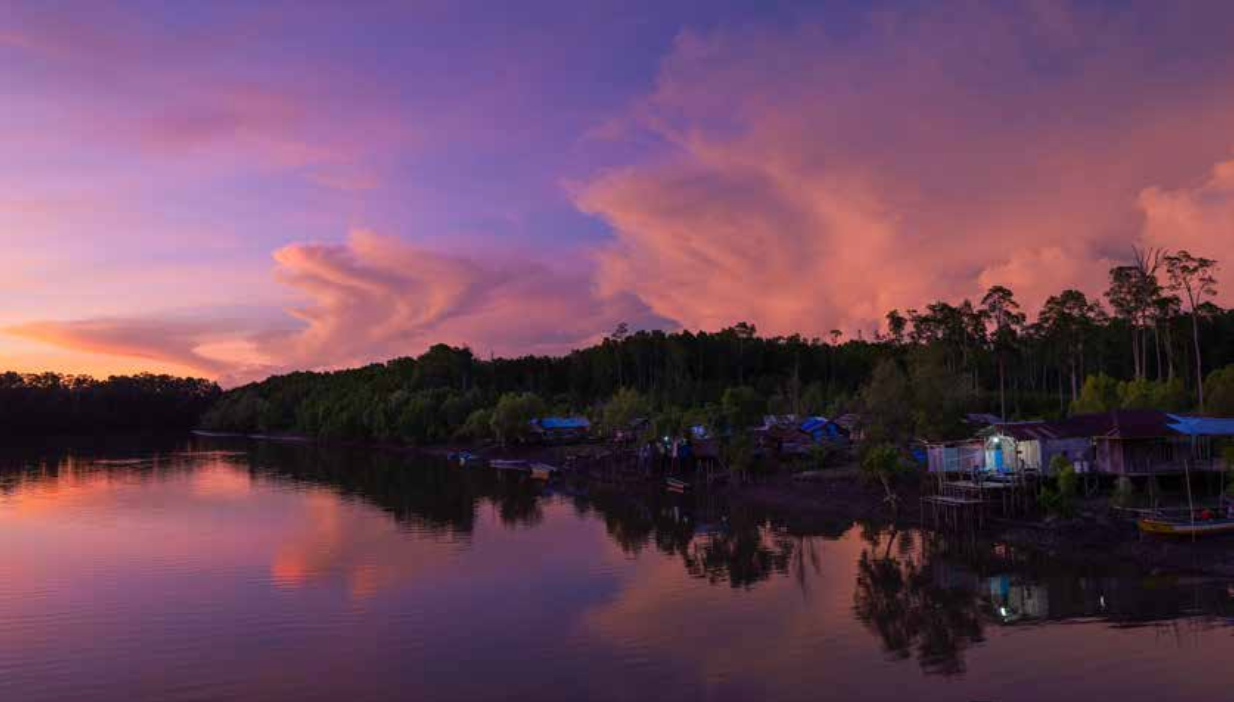
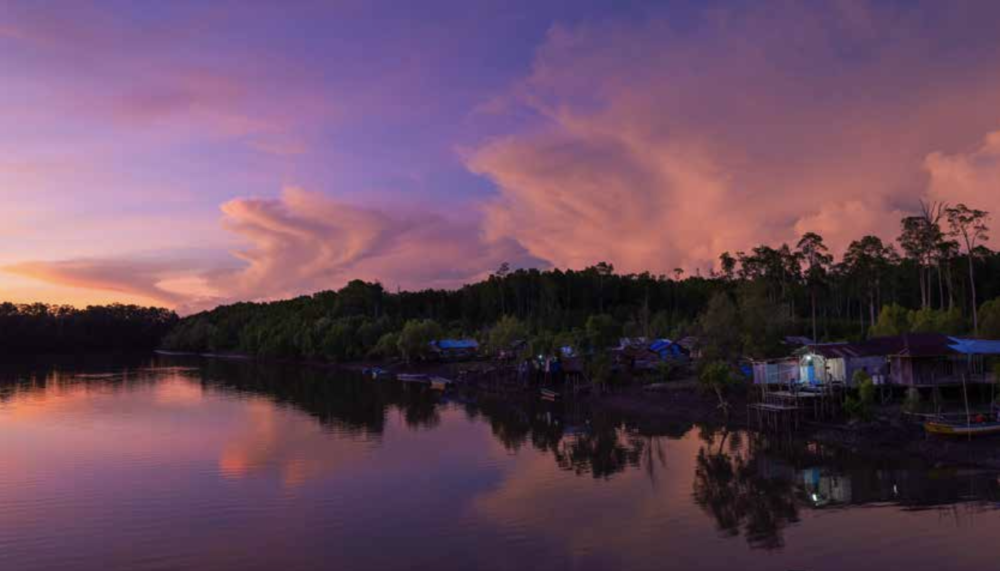
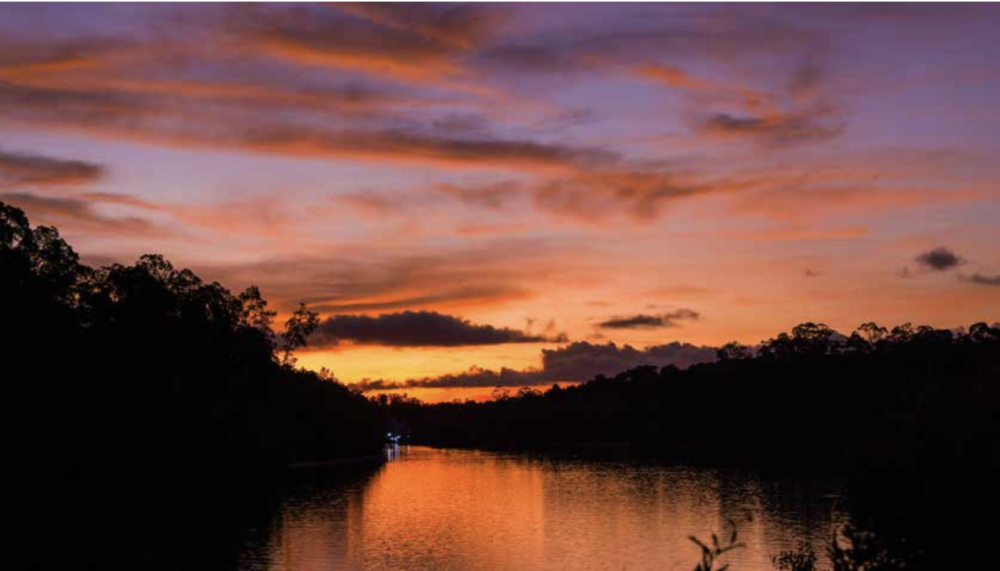
The sunset view here is beautiful. You’ll be mesmerised by the island’s twilight beauty. At night, you can watch the horizon sparkle with clusters of stars. In Keakwa, the beginning and end of the day are amazing times.